Open Cell Spray Foam Insulation in Charlotte, NC
R-3.7 per inch, excellent sound attenuation, and a softer feel that is ideal for attic rafter decks and interior wall cavities. Open cell foam provides complete air sealing at a lower cost per square foot than closed cell.
What Is Open Cell Spray Foam?
Open cell spray polyurethane foam (ocSPF) is a soft, flexible foam with a 0.5-pound density and an R-value of approximately 3.5 to 3.7 per inch. Unlike closed cell foam, the cells within open cell foam are intentionally left open -- which makes the foam vapor-permeable and gives it excellent sound-dampening properties.
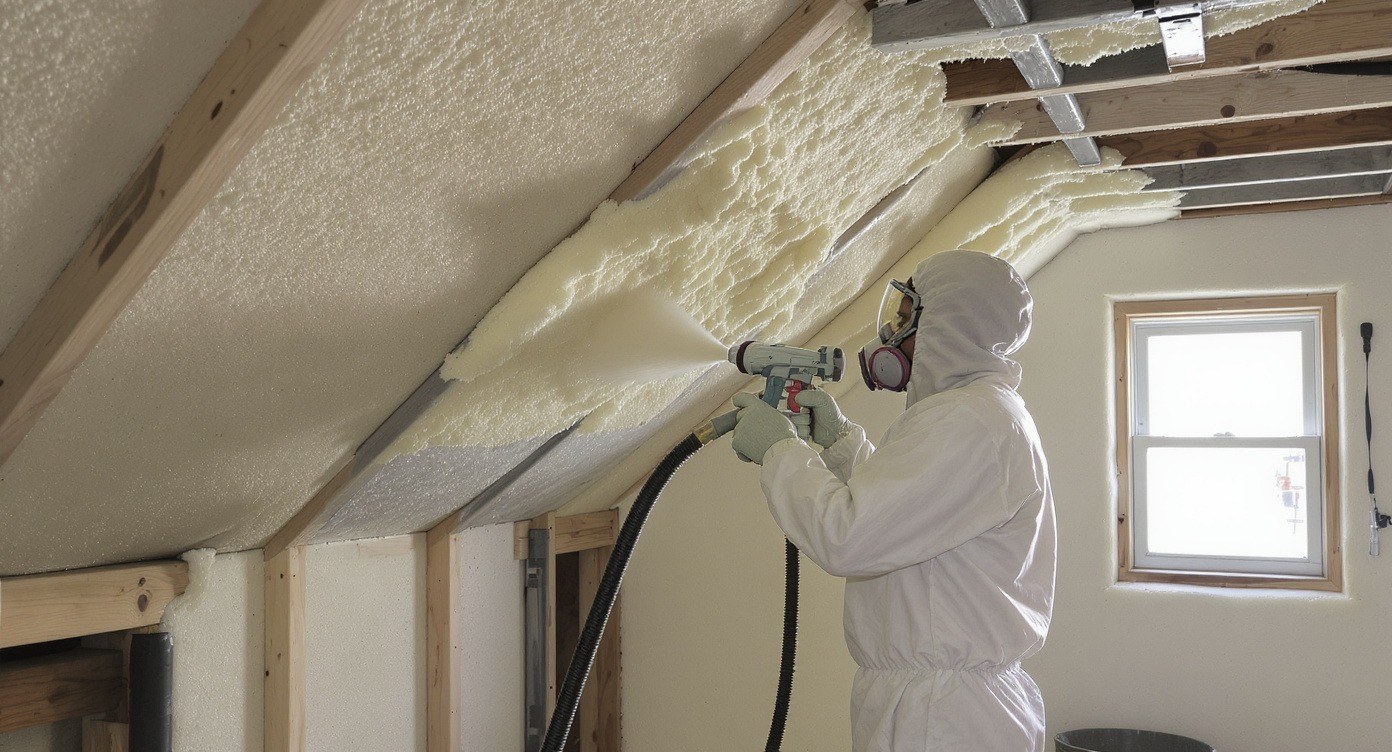
In Charlotte's climate, open cell foam is commonly used on attic rafter decks (creating a conditioned attic that keeps HVAC equipment within the thermal envelope), interior wall cavities where sound control is important, and in areas where a vapor-permeable assembly is desired. At 5.5 inches in a standard 2x6 wall cavity, open cell foam achieves R-20 -- meeting NC energy code requirements.
Open cell foam is significantly less expensive per board foot than closed cell foam, making it an excellent value for large-area applications like attics where vapor control is managed separately (or where the roof deck itself provides the primary air barrier).
- Complete air sealing -- eliminating the primary source of energy loss
- Excellent sound control -- reduces airborne noise transmission significantly
- Vapor-permeable -- allows walls and assemblies to dry if moisture enters
- Fills irregular cavities completely -- no gaps or voids
- Lower cost per square foot than closed cell -- ideal for large areas
- R-20+ at 5.5 inches in standard wall cavities
- Creates conditioned attic space, keeping HVAC in the thermal envelope
Get a Free Estimate
Our Process
We follow SPFA (Spray Polyurethane Foam Alliance) installation protocols on every project.
- 1
Project Assessment
We evaluate your attic, wall cavities, or target application areas. For attics, we assess rafter depth, HVAC equipment location, and existing ventilation to determine the optimal foam system.
- 2
Ventilation Preparation
For attic applications, existing ridge and soffit vents are typically blocked (conditioned attic approach). We coordinate any HVAC transitions required.
- 3
Surface Prep and Safety
Surfaces cleaned, work area ventilated, full PPE donned, homeowner vacates premises during application.
- 4
Foam Application
Open cell foam is applied in single or multiple passes to achieve specified thickness. The foam expands 100x and fills every cavity, gap, and penetration uniformly.
- 5
Trimming and Inspection
Excess foam is trimmed flush with framing. We inspect for uniform coverage and confirm no gaps or thin spots at edges and penetrations.
- 6
Final Walkthrough
We walk you through the completed installation, explain expected performance, and address any questions about your new conditioned space.
Frequently Asked Questions
How much does open cell spray foam cost in Charlotte?
Open cell spray foam typically costs $1.25 to $2.50 per square foot in Charlotte, depending on thickness and application area. A typical attic application at 6 inches for a 1,500 sq ft attic floor footprint runs $2,500 to $4,500. We provide free estimates for every project.
Should I use open cell or closed cell foam in my Charlotte attic?
For conditioned attic applications on rafter decks (spraying the underside of the roof deck), either type works. Open cell at 5.5 to 6 inches achieves the target R-value and is typically more economical for large attic areas. Closed cell is preferred when vapor control is critical or when the roof deck needs structural reinforcement. We assess and recommend the right product for each specific situation.
Will open cell spray foam reduce noise between floors?
Yes, significantly. Open cell foam's sound absorption coefficient is much higher than fiberglass batts or blown cellulose. Applying open cell foam in floor/ceiling assemblies between floors reduces airborne sound transmission noticeably. It is a common upgrade in Charlotte new construction and renovations.
Does open cell spray foam need a vapor barrier?
Open cell foam is vapor-permeable, so in some applications a separate vapor barrier or retarder is required. In North Carolina's mixed-humid climate, the specific requirements depend on the assembly type and location. We assess each project and make specific recommendations compliant with the NC Residential Code.
How long does open cell foam last?
Open cell spray foam does not degrade, sag, or lose R-value over time. Once cured, it is stable indefinitely. Its open-cell structure makes it vapor-permeable, so it can manage moisture without trapping it -- an advantage in assemblies where seasonal drying is important.
Is open cell spray foam safe for my family?
Once fully cured (24-48 hours after application), open cell spray foam is inert and safe. During application, we ensure full ventilation and require homeowners to vacate the area. We follow all SPFA (Spray Polyurethane Foam Alliance) safety protocols including respiratory protection for our crew.
Ready to Get Started?
Get your free spray foam estimate from Charlotte's most trusted insulation specialist.