Air Sealing and Energy Efficiency in Charlotte, NC
Air leakage accounts for 25 to 40 percent of Charlotte home energy loss. Comprehensive air sealing with spray foam addresses this at the source -- sealing the hundreds of small penetrations and gaps that your insulation cannot fix.
The Air Sealing Problem in Charlotte Homes
Most Charlotte homeowners have heard that their home needs more insulation. But the less understood truth is that adding insulation on top of a leaky building envelope produces disappointing results. Insulation slows the conduction of heat through solid materials -- but air can move around and through insulation without resistance. If there are air leakage paths around your insulation, the insulation R-value is essentially bypassed.
A typical Charlotte home built before 2000 has thousands of small air leakage points: top plate penetrations where wires, pipes, and ductwork pass from the living space into the attic; bottom plate penetrations from the basement or crawl space up into the walls; gaps around recessed lights; the rim joist band; the attic hatch; and gaps at every window and door rough opening. Individually, these seem minor. But measure them with a blower door test and you frequently find an effective air leakage area equivalent to a window left open year-round.
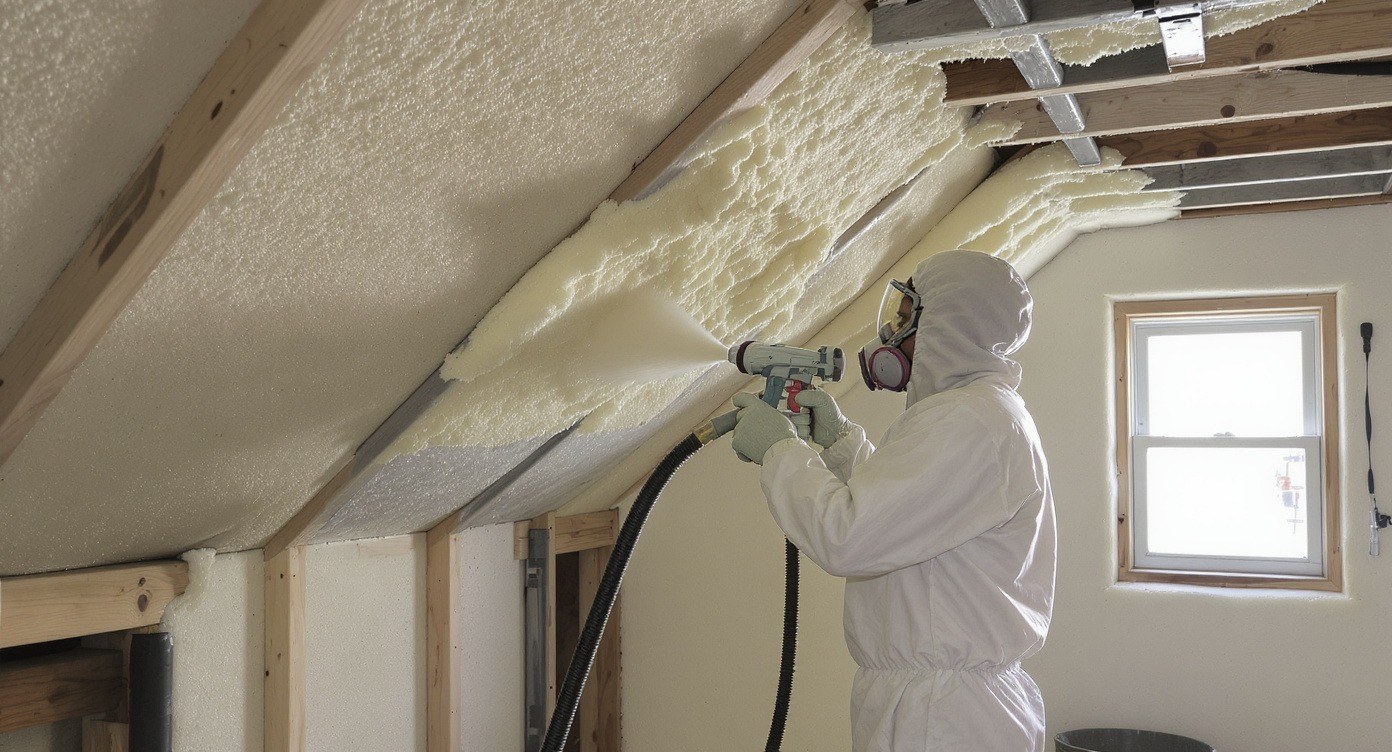
Spray foam is the most effective air sealing material available because it expands to fill irregular shapes and gaps, adheres to virtually any substrate, and cures permanently without shrinking or cracking. A systematic air sealing program using spray foam, combined with appropriate insulation upgrades, can reduce HVAC energy consumption 20 to 40 percent in older Charlotte homes.
- Identifies and seals the top air leakage contributors systematically
- Spray foam seals irregular gaps that caulk cannot effectively reach
- Reduces HVAC runtime and energy bills 20-40% in typical older Charlotte homes
- Improves indoor comfort by eliminating drafts and cold spots
- Can be paired with blower door testing to measure before/after improvement
- Can qualify for Duke Energy or Dominion Energy efficiency incentives
Get a Free Estimate
Our Process
We follow SPFA (Spray Polyurethane Foam Alliance) installation protocols on every project.
- 1
Energy Assessment
We assess the home for primary air leakage contributors: attic top plates, rim joists, crawl space penetrations, recessed lights, HVAC penetrations, and foundation/framing gaps. Thermal imaging can be used to visualize air infiltration patterns.
- 2
Priority Ranking
Not all air leaks are equal. We rank identified leakage points by estimated contribution to total air leakage and develop an air sealing plan that addresses the highest-impact areas within budget.
- 3
Attic Air Sealing
Top plates, attic hatch, recessed light covers, and ductwork penetrations are foam-sealed from the attic side. Typically done in conjunction with attic insulation upgrades.
- 4
Crawl Space and Rim Joist Sealing
Bottom plates, rim joists, and all crawl space penetrations (pipes, wires, ductwork) are sealed with closed cell foam.
- 5
Interior Air Sealing
Electrical boxes, plumbing penetrations through interior partitions, and any identified interior bypass paths are sealed.
- 6
Final Air Sealing Check
We do a walkthrough inspection of all sealing work before completion. Blower door testing can be arranged (third party) to verify improvement if desired.
Frequently Asked Questions
What is a blower door test and should I get one?
A blower door test uses a calibrated fan mounted in an exterior doorway to depressurize the house and measure total air leakage (expressed in ACH50 -- air changes per hour at 50 pascals of pressure). NC Energy Code requires new construction to achieve 3 ACH50 or better. Older Charlotte homes often test at 8 to 15 ACH50. We can arrange blower door testing through certified BPI energy auditors to quantify before and after air sealing improvement.
Will air sealing create indoor air quality problems?
Comprehensive air sealing requires mechanical ventilation in very tight houses (below 3 ACH50) per ASHRAE 62.2 standards. Charlotte Expert accounts for ventilation requirements in our air sealing recommendations. Most older Charlotte homes, even after significant air sealing work, remain in the range where mechanical ventilation is not mandated but may be recommended.
Can air sealing help with humidity in my Charlotte home?
Yes, significantly. Uncontrolled air infiltration is the primary moisture entry mechanism in mixed-humid climates like Charlotte's. When humid outdoor air enters through unsealed gaps in summer and contacts cool interior surfaces, condensation occurs and moisture accumulates. Air sealing reduces this uncontrolled moisture entry and makes mechanical dehumidification (if present) more effective.
How much does air sealing cost in Charlotte?
A comprehensive air sealing service (attic top plates, rim joists, crawl space penetrations, recessed lights) for a typical 2,000 square foot Charlotte home runs $1,500 to $3,500 as a standalone service, or is included in larger insulation projects. Specific pricing depends on access conditions and the scope of penetrations to be sealed.
Ready to Get Started?
Get your free spray foam estimate from Charlotte's most trusted insulation specialist.