Attic Spray Foam Insulation in Charlotte, NC
Charlotte attics can reach 150°F in summer. Spray foam on the roof deck creates a conditioned attic that protects your HVAC equipment, eliminates thermal bridging, and can cut attic-related energy loss by 40% or more.
Why Charlotte Attics Need Spray Foam
A Charlotte attic in July is an energy nightmare. Unventilated attic air temperatures regularly exceed 140 to 150 degrees Fahrenheit during peak summer heat. Traditional fiberglass batts on the attic floor do not address the radiant heat transfer from the superheated roof deck, and they do nothing to protect your HVAC equipment -- which is almost always located in the attic in Charlotte-area homes -- from that extreme heat load.
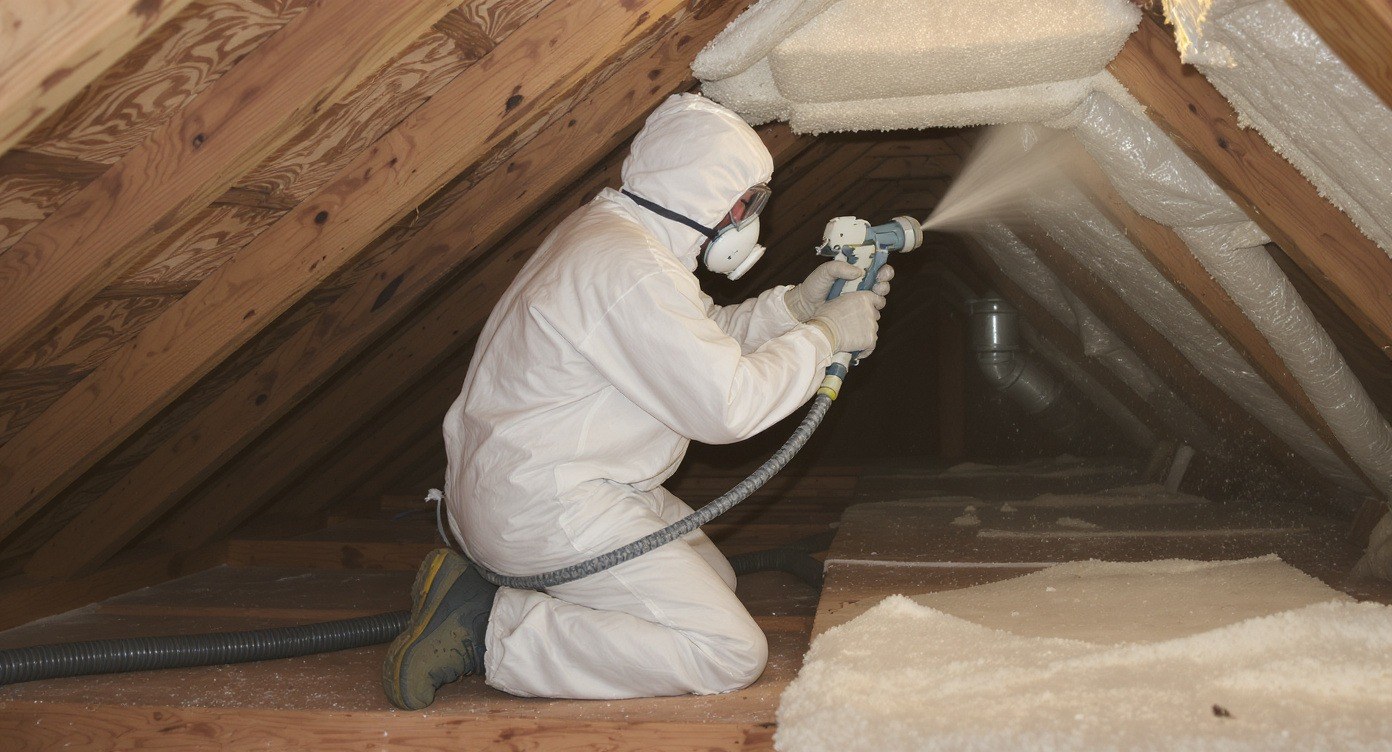
Spray foam insulation on the underside of the roof deck (the rafter deck application) solves this problem at the source. Instead of trying to insulate between the attic and the living space, we bring the attic inside the thermal envelope. The attic becomes a conditioned space -- cooler, drier, and protected. Your HVAC system operates at its rated efficiency instead of in 140-degree air. Ductwork in the attic does not leak cooled air into an unconditioned space. The entire second floor of your home becomes more comfortable.
North Carolina's 2024 Residential Energy Code (based on the 2021 IECC) requires minimum R-38 in Climate Zone 3 attic applications. Spray foam on the roof deck at 5.5 to 6 inches of open cell (R-20+) combined with the roof deck itself typically meets code requirements with a sealed attic variance -- we handle the technical compliance details.
- Brings attic inside the thermal envelope -- no more 150-degree attic air
- Protects HVAC equipment from extreme temperature exposure
- Eliminates duct losses in unconditioned attic space
- Can cut HVAC energy consumption 30-50% for two-story Charlotte homes
- Prevents ice dam formation (increasingly relevant as NC weather varies)
- Eliminates conditioned air loss through attic bypasses and penetrations
- More effective than blown-in insulation for Charlotte's hot-humid climate
Get a Free Estimate
Our Process
We follow SPFA (Spray Polyurethane Foam Alliance) installation protocols on every project.
- 1
Attic Assessment
We inspect your attic, measure rafter depth, note HVAC equipment location, check existing insulation and ventilation, and identify penetrations and air bypasses.
- 2
Code Compliance Review
We review NC Residential Code requirements for your application -- sealed attic systems have specific requirements for vapor management and ignition barriers that we handle on your behalf.
- 3
Soffit and Ridge Blocking
For conditioned attic applications, soffit vents are typically blocked and ridge vents sealed or plugged. This is a code-approved approach in NC for properly sealed attic assemblies.
- 4
Foam Application
Open cell or closed cell foam is applied to the underside of the roof deck and the interior faces of the gable end walls, working from the ridge down. We achieve uniform thickness across the entire roof surface.
- 5
HVAC Transition
If your HVAC system needs reconfiguration for the new conditioned attic approach, we coordinate with your HVAC contractor. Combustion appliances require careful assessment in sealed attic environments.
- 6
Final Inspection and Walkthrough
Coverage is inspected for uniformity and compliance. We walk you through the completed attic, explain what to expect, and answer questions about comfort improvements and energy savings.
Frequently Asked Questions
How much does attic spray foam insulation cost in Charlotte?
Attic spray foam insulation in Charlotte typically costs $2,500 to $7,500 for a standard residential attic, depending on the square footage, rafter depth, and whether open or closed cell foam is used. The payback period through energy savings is typically 3 to 7 years for Charlotte homeowners.
Should I spray foam my attic floor or the roof deck?
The roof deck (rafter deck) application is generally more effective in Charlotte for homes with HVAC equipment in the attic. It creates a conditioned attic space that protects your HVAC and eliminates duct losses. The floor application (over existing blown-in) can work for homes with no attic HVAC, but it leaves the attic in an extreme temperature environment. We assess your specific situation and recommend the optimal approach.
Can I keep my attic ventilation if I spray foam the roof deck?
No. The conditioned (sealed) attic approach requires blocking soffit and ridge vents to prevent outdoor air from entering the now-conditioned space. This is a code-compliant approach when properly executed. The spray foam on the roof deck replaces the ventilation function with an air-impermeable thermal barrier.
How much energy will attic spray foam save on my Charlotte home?
Charlotte homeowners with ductwork in the attic commonly see 25 to 45 percent reductions in HVAC energy use after proper attic spray foam installation. The combination of reduced thermal load on the attic space and elimination of duct losses drives significant savings. Results vary by home size, existing insulation levels, and HVAC system efficiency.
Does attic spray foam work with my existing blown-in insulation?
It depends. If blown-in insulation is on the attic floor, we can spray foam the roof deck above it to create a conditioned attic -- the blown-in becomes irrelevant and can be left or removed. If the blown-in is poorly installed or has settled significantly, we may recommend addressing it first. We assess each attic individually.
Will attic spray foam help with ice dams?
Charlotte rarely gets severe ice dams, but proper attic air sealing (which spray foam provides comprehensively) does prevent the conditions that cause ice damming -- warm attic air melting snow at the roof peak that refreezes at the eaves. As NC weather patterns become less predictable, this is a worthwhile benefit.
Ready to Get Started?
Get your free spray foam estimate from Charlotte's most trusted insulation specialist.