Closed Cell Spray Foam Insulation in Charlotte, NC
The highest-performance spray foam insulation available. R-6.5 per inch, acts as a vapor retarder, and adds structural rigidity -- the best choice for crawl spaces, basements, rim joists, and exterior walls in Charlotte's climate.
What Is Closed Cell Spray Foam?
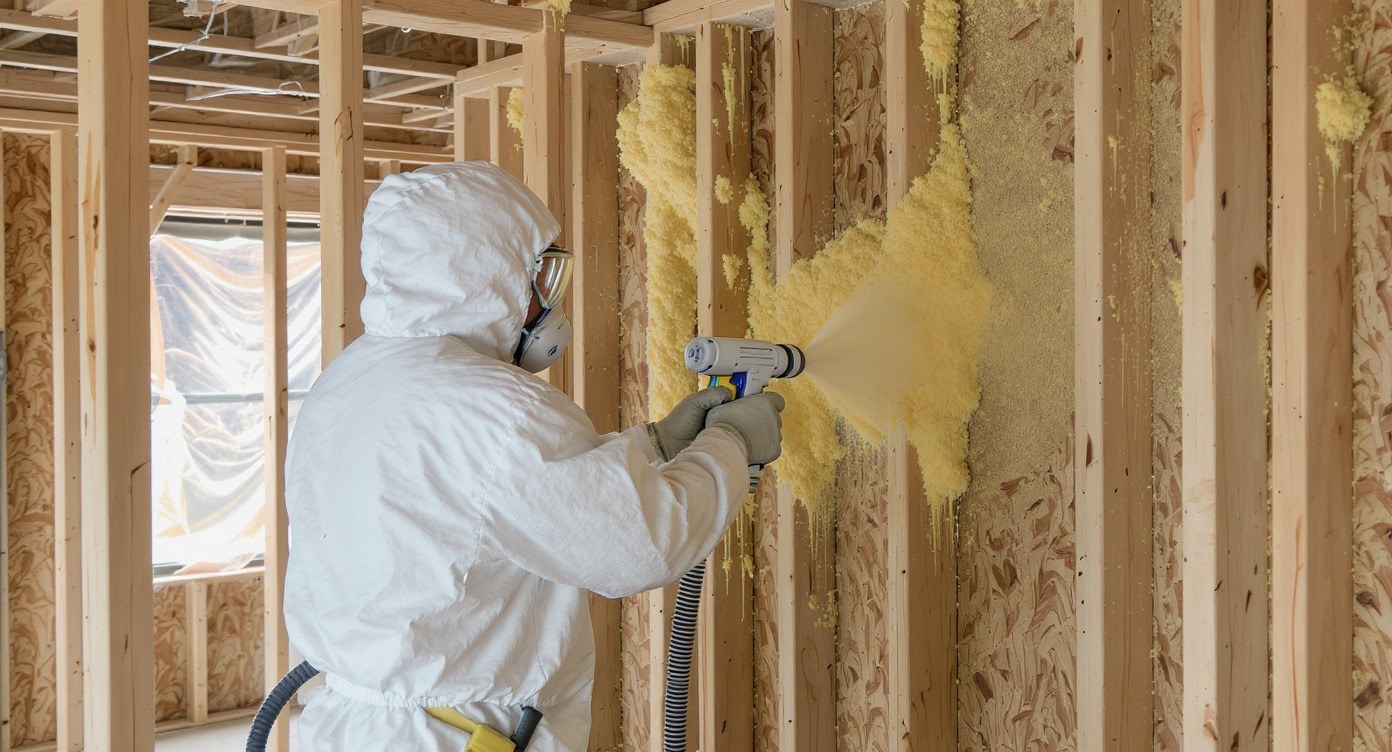
Closed cell spray polyurethane foam (ccSPF) is a rigid, high-density foam insulation with a 2-pound density and an R-value of approximately 6.5 per inch. Unlike open cell foam, the cells within closed cell foam are completely sealed -- which is what gives it its unique combination of insulation value, vapor control, and structural rigidity.
In Charlotte's Climate Zone 3 environment -- hot, humid summers and cool winters -- closed cell foam is the right choice wherever moisture control is as important as thermal performance. Its low vapor permeance rating (less than 1 perm at 2 inches) makes it function as a Class II vapor retarder, protecting your home's structural elements from moisture damage without the need for a separate vapor barrier in most applications.
Typical closed cell foam applications in Charlotte include crawl space walls and floors, basement walls, rim joists (band joists), conditioned attic roof decks, exterior wall cavities in new construction, and commercial building envelopes. At Charlotte Expert, we use premium two-component SPF systems from industry-leading manufacturers to ensure consistent, off-ratio-free application.
- R-6.5 per inch -- highest R-value per inch of any insulation type
- Acts as a Class II vapor retarder (under 1 perm at 2 inches)
- Adds structural rigidity to wall assemblies
- Fully adheres to substrate -- no settlement or sagging over time
- Resistant to water absorption and mold growth
- Reduces air infiltration by up to 98% when properly applied
- Ideal for Charlotte's hot-humid Climate Zone 3 conditions
- ASHRAE 90.1 and NC building code compliant
Get a Free Estimate
Our Process
We follow SPFA (Spray Polyurethane Foam Alliance) installation protocols on every project.
- 1
Assessment and Measurement
We assess your space, measure coverage area, and determine the correct foam thickness for your application and local code requirements (typically 2 inches minimum for vapor control, more for thermal performance targets).
- 2
Substrate Preparation
All surfaces are cleaned, dried, and cleared of debris. Temperature and humidity are checked -- application requires substrate temperatures above 40°F and relative humidity below 70% for proper adhesion and cure.
- 3
Safety Setup
We set up containment, ventilate the work area, and don full PPE including supplied-air respirators. Homeowners are asked to vacate the area during application.
- 4
Foam Application
Closed cell foam is applied in controlled lifts (typically 2 inches per pass) to achieve the specified thickness without overheating the material. Our trained applicators monitor off-ratio indicators throughout.
- 5
Cure and Inspection
Closed cell foam is tack-free within minutes and fully cured within 24 hours. We inspect coverage for uniform thickness and proper adhesion before completing the job.
- 6
Cleanup and Walkthrough
Work area is cleaned and we walk through the project with you, explaining what was done and what results to expect. Most Charlotte homeowners notice improved comfort within 24-48 hours.
Frequently Asked Questions
How much does closed cell spray foam cost in Charlotte, NC?
Closed cell spray foam insulation in Charlotte typically costs $2.50 to $6.00 per square foot depending on application area, thickness, and accessibility. A typical crawl space treatment runs $2,000 to $4,500. Rim joist sealing runs $800 to $1,800. We provide free, detailed estimates for every project.
How thick should closed cell foam be in a Charlotte crawl space?
For a Charlotte crawl space in NC Climate Zone 3, we typically apply 2 to 3 inches of closed cell spray foam to the foundation walls and floor perimeter. This achieves R-13 to R-20 and provides full vapor control. For maximum performance, 3 to 4 inches (R-20 to R-26) is recommended.
Can closed cell spray foam get wet?
Closed cell spray foam has very low water absorption -- less than 2% by volume -- and will not absorb groundwater or condensation the way fiberglass or cellulose insulation does. It will not support mold growth on its own. However, we always address moisture sources before foam application, as standing water beneath the foam can still cause issues.
Does closed cell foam need a vapor barrier?
At sufficient thickness (2+ inches), closed cell foam acts as its own vapor retarder and typically does not require a separate poly vapor barrier in Charlotte's climate zone. We assess each project individually and provide specific recommendations based on your space.
Will closed cell foam help with my high energy bills?
Yes, significantly. Closed cell foam provides both insulation and air sealing in a single application. Charlotte homeowners with uninsulated or poorly insulated crawl spaces, attics, or rim joists commonly see 30 to 50 percent reductions in heating and cooling costs after closed cell foam installation.
Is closed cell spray foam flammable?
Like all organic materials, closed cell spray foam is combustible. Building codes require it to be covered by a thermal barrier (such as 1/2-inch drywall) when installed in living spaces. In crawl spaces and attics meeting specific criteria, ignition barriers may be acceptable. We handle all code compliance requirements on every project.
Ready to Get Started?
Get your free spray foam estimate from Charlotte's most trusted insulation specialist.